World Menopause Day 2026

World Menopause Day 2026:
Chronic Pain, the Mental Load and Finding Support

World Menopause Day, 18 October 2026: this year’s theme is chronic pain in midlife
`
Let’s chat about the surprise nobody saw coming
Every year on October 18th, World Menopause Day encourages us to discuss something that half the population will experience, yet many still endure in silence. The International Menopause Society (IMS) initiated this day in 2009 to boost awareness and improve support for women during this transition.
Menopause isn’t a disease, nor is it the end of the line. It is a natural biological change that can affect sleep, mood, work, relationships, and long-term health. The more we understand it, the better we can take care of ourselves and each other.
This Year’s Theme: Chronic Pain in Midlife
The IMS has chosen Chronic Pain in Midlife as the theme for 2026, and their experts are currently working on a White Paper dedicated to this important topic.
Finally, we’re seeing some much-needed attention on this issue! Midlife often comes with its fair share of discomfort aching joints, stiff muscles, headaches, and pelvic pain are just a few of the common complaints. Unfortunately, these issues often get sidelined in discussions about menopause. It turns out that oestrogen plays a crucial role in managing inflammation, repairing tissues, and processing pain. When oestrogen levels drop, pain can suddenly decide to crash the party, uninvited.
Pain is a bit like that friend who never shows up alone; it often brings insomnia along for the ride. Before you know it, you’re caught in a vicious cycle: poor sleep exacerbates the pain, and together they drain your mood and energy. It’s a tough situation that many face, and it deserves more recognition.
So much more than hot flushes.....
Menopause: The Uninvited Guest
Menopause typically crashes the party between ages 45 and 55, but some women find it sneaking in earlier, like an unwelcome relative showing up at your door in their 30s. Ready to stay over already unpacking a suitcase full of weirdly confusing feelings and symptoms.
Technically, menopause is defined as the moment you realise you haven’t had a period for 12 months. Before that theres the warm up to the main event known as perimenopause. Hormone levels fluctuate like a teenager’s mood swings but in reverse, leaving you on a knifes edge wondering whats next on the emotional rollercoaster. And will it ever stop?!
According to the NHS, symptoms generally last 7 to 9 joyous years. Sometimes they linger longer, like that one friend who just can’t take a hint. While hot flushes and night sweats can be seen as the main acts, the full lineup of symptoms is quite the show:
Changes to periods, signals the show has begun
Difficulty falling asleep or staying asleep, because who needs rest when you can have insomnia?
Low mood, anxiety, depression...
Muscle aches and joint pain, reminding you that you’re not as spritely as you used to be
Headaches and migraines that are more severe than usual, because why not add a little extra pain when you are exhausted from lack of sleep?
Increased trips to the toilet sometimes with uncomfortable vaginal dryness, more UTIs, and an increased need to urinate. Which of course is usually just as you are about to fall into that much needed sleep.
Palpitations, unexpected dizziness, thinning hair, and dry, itchy skin
Weakening bones, which can lead to osteoporosis.
And let’s not forget the infamous brain fog, which makes you feel like you’re forgotten everyone's name, that you never learned how to string a sentence together, let alone hold a conversation. All that information stored in your brain from 30/40 years of life just out of your reach.
Excess body hair - oh look theres another pubic like hair sprouting from your chin, nipple, chest/ all of the above! Your trusty tweezers always need to be close to hand.
Each person's experience is as unique as they are. Some hardly notice any changes, while others find that symptoms impact their relationships, social life, and work—like an energy vampire at a party. And let’s not forget that ethnic background can also influence the severity and duration of symptoms, adding yet another twist to the ride
You don’t have to just put up with it
Getting advice sooner rather than later can keep your health, relationships, and work from going haywire.
HRT (hormone replacement therapy): oestrogen tablets, patches, pessaries, gel, or spray—with a side of progestogen if you still have your womb. Vaginal oestrogen can be a game changer for UTIs, vaginal dryness and bladder control.
Testosterone: Boosts low libido, usually only available from a menopause specialist.
Non-hormonal options: therapy and some medicines like clonidine or certain antidepressants can help you chill through hot flushes, night sweats, and low mood.
Lifestyle: Get moving, lift some weights, catch those Z's, and munch on a balanced diet to keep your joints, bones, mood, and pain in check.
Herbal remedies: there's not much proof they work or are safe, and they could interfere with other medications.
Chatting with your GP: Jot down a quick symptom diary for a few weeks, noting any creaks and groans, and bring it along. Of course see a GP is you feel your heart is beating irregularly, your bleeding's got heavy , or you start bleeding again after a year of peace and quiet.
Menopause at work, and how everyone can help
Many folks hit menopause just as they're nailing it at work. Suddenly, with aches, sleepless nights, and brain fog, a regular day at the office feels like scaling Everest, and too many women stay quiet to dodge the judgment police.
Perimenopause and menopause love to crash the party right when women are juggling their own kids, maybe even grandkids, and caring for their elderly relatives. Just when they're recovering from the chaos of raising a family and building back their career, then Wham! Unpredictable surges of hormones make an unwelcome appearance and unsettle your world.
Little tweaks can make a world of difference:
Flexibility: start work later or from home after a night of battling insomnia.
Comfort: a desk fan, a steady supply of cool drinks, uniforms that breathe, and a zen zone.
Movement: seats that coddle creaky joints, and the liberty to stand, stretch, or sneak in a brisk walk.
Daylight and fresh air to help with cardiac rhythms especially if insomnia is a problem
Talking: Be the change you want to see, and start chatting away! Don’t let that pesky shame monster pop up like an unwanted zit. Remember, half the population is in the same boat, was in the same boat, or will be in the same boat. Future wombs everywhere will be greatful.
Four simple workplace changes: flexibility, comfort, movement and conversation
What’s changing in UK workplaces
The law is finally waking up from its nap! Thanks to the Employment Rights Act 2025, employers with 250 or more staff can now flaunt a menopause action plan right next to their gender pay gap data. These plans have been a 'nice-to-have' since April 2026 but are set to become a 'must-have' from spring 2027. Each plan should include at least one practical move to support employees through the rollercoaster of perimenopause, menopause, and beyond, picked from a government menu of smart options like personalised workplace adjustments.
The government reports that 1 in 10 women have waved goodbye to their jobs during menopause due to pesky symptoms. Smaller businesses are off the hook for now, but the government is giving them a nudge to follow the same playbook.
Campaigners are urging the government to crank it up a notch, with a LabourList column in August suggesting we need a Minister for Women’s Health on the scene.
If work feels like a circus, it’s worth asking your boss if there's an action plan or menopause policy in place, and what kind of magic tricks they have up their sleeve for you.
And for partners, friends, and family: be the detective, ask, listen, and believe. A simple “How are you really doing?” can unlock a vault of feelings that’s been sealed tighter than a drum.
The mental load, and when ADHD, ASD & AuDHD can makes a grand entrance
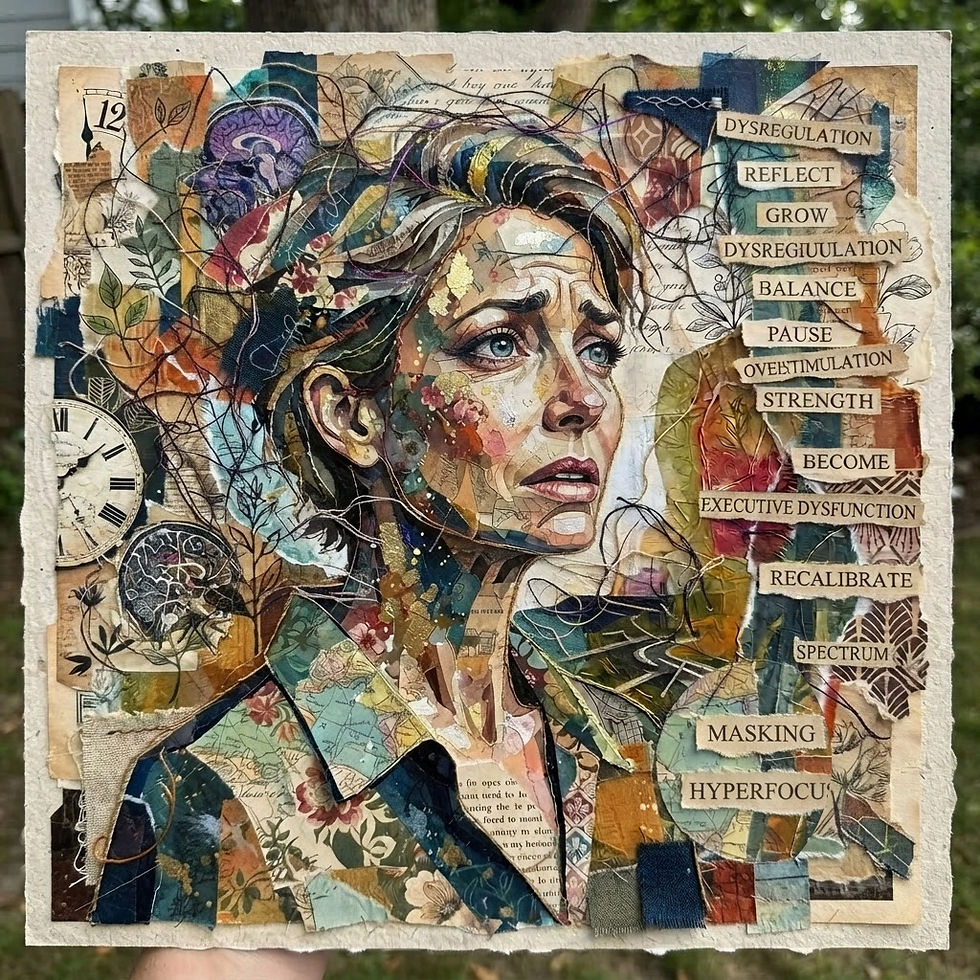
So many tabs open at once: school run, work deadlines, elderly parents, hot flushes, sleepless nights, and an ADHD assessment
The mental load can hit its crescendo during these years. Hormonal changes can also bring neurodivergence that was once stealthy, managed, and maybe even incognito, right to center stage: masking becomes a tightrope act, and even more mental tabs are open at once. Many women with perimenopausal symptoms who have been cruising along are suddenly told they might want an ADHD assessment.
The research backs up what many women have been whispering. Oestrogen, the brain’s dopamine regulator, decides to play hide and seek, and as it dips and dives, ADHD traits that were once tamed can become unruly. A 2026 review in Drugs & Aging notes that ADHD in women is often the invisible guest, and the hormonal shifts of perimenopause can either turn the spotlight on it or make it even more dramatic. The same review highlights a Dutch study showing that women with diagnosed ADHD report worse perimenopausal symptoms than women in general, and Icelandic research connecting ADHD with an earlier menopause.
In September 2026, ITV News reported that up to three-quarters of women with ADHD are thought to be either undiagnosed or diagnosed late, with perimenopause often being the moment they finally seek help.
Why did so many slip through the cracks? ADHD and autism were historically studied mostly in boys, and girls often show their skills in the art of subtlety, like inattention, daydreaming, and anxiety. Many learn to mask, using perfectionism, over preparation, and people pleasing to keep up. That works, until hormonal changes pull the rug out from under them.
A diagnosis in midlife can be a revelation: an explanation for a lifetime of feeling like a quirky outsider, and a roadmap to the right support. It can also bring a whirlwind of emotions, including regret for the years spent muddling through without answers. All of these feelings are valid, and it’s common to feel like you’re juggling them all at once.
If this sounds like your life story:
Chat with your GP about your menopause symptoms and any lifelong struggles with focus, organisation, or feeling overwhelmed. ADHD traits are part and parcel of who you are, so old school reports or family tales can be a goldmine.
Discuss treating menopause symptoms too, as brain fog and poor concentration overlap with ADHD, and an assessment should consider both.
Seek expert advice, like the ADHD Foundation’s guide to ADHD and the perimenopause.
Research in this area is still playing catch-up, but the message is loud and clear: struggling more in midlife is not a personal failing, and asking for help is a smart move.
How therapy can help
Menopause can stir up a whole cauldron of emotions: changes to your body and mind, shifting roles at home and work, questions about identity, and sometimes the surprise guest of a neurodivergence you never knew was there. Therapy offers you a confidential space to spill it all out, at your own pace and without judgment.
Therapy can help you:
Make sense of the whirlwind you’re experiencing, both physically and emotionally, and feel less like you’re on a solo mission.
Explore anxiety, low mood, irritability, or loss of confidence that can come with hormonal change.
Untangle the mental load and find ways to set boundaries, ask for help, and protect your energy.
Process grief or loss, whether it’s for fertility, a former sense of self, or the life stages you’re moving on from.
Think through whether to seek an ADHD or autism assessment, and what a diagnosis might mean for you.
Work through the complex feelings after a late diagnosis, from relief and recognition to anger and grief for the years spent without answers.
Learn to unmask safely and build ways of living that suit how your brain really works.
Therapy doesn’t replace medical care. It’s can offer that extra to support that your GP or menopause specialist might not be able to provide. Ensuring your emotional wellbeing is being cared for as much as your physical health.

Hidden Insights Therapy
At Hidden Insights Therapy, I offer a warm, confidential space to explore everything perimenpause and menopause brings, including the questions and feelings that can come with a possible ADHD diagnosis in midlife. If anything in this post resonates with you, I’d love to hear from you - Emma
Marking World Menopause Day on 18 October
Check in with a friend, colleague, or family member who might be in the thick of it.
Start a symptom diary, and jot down any aches and pains alongside the rest.
Book that GP appointment you’ve been dodging.
Ask your workplace whether it has a menopause policy, and help kickstart one if not.
Menopause is a stage of life, not a full stop. Pain in midlife is common, but it isn’t something you just have to grin and bear. The more we chat about it, the easier it becomes for everyone to get the support they deserve.
Sources
International Menopause Society: President’s message, April 2026
ITV News: How perimenopause is leading to ADHD diagnosis in women, 23 September 2026
GOV.UK: Government launches gender pay gap and menopause action plans, 4 March 2026
GOV.UK: Offer workplace adjustments for employees experiencing menopause
Osborne Clarke: Gender pay gap and menopause action plans, March 2026

Comments